
About me and Green Lynx Mastering
The Journey: From the Stage to the Studio
Born in 2000, music hasn’t just been my career—it has been my environment. My name is Maj—yes, born in May, and no, the puns never get old. My formal education began at age eight, where I developed a dual foundation in piano and guitar. However, it was a 5th-grade school ceremony that changed everything; my teacher chose me to sing lead vocals on the classic “Tri planike,” and that first taste of the stage sparked a lifelong fire. The rest, as they say, is history.
Before stepping into my current role, I spent years in the trenches, honing my craft in various bands where the “stage” was often just a crowded corner of a room. Those years were my education in the grit and soul of music; I learned how a melody can change the air in a room and how a lyric can bridge the gap between a stranger and a friend. It was raw, it was loud, and it was real.
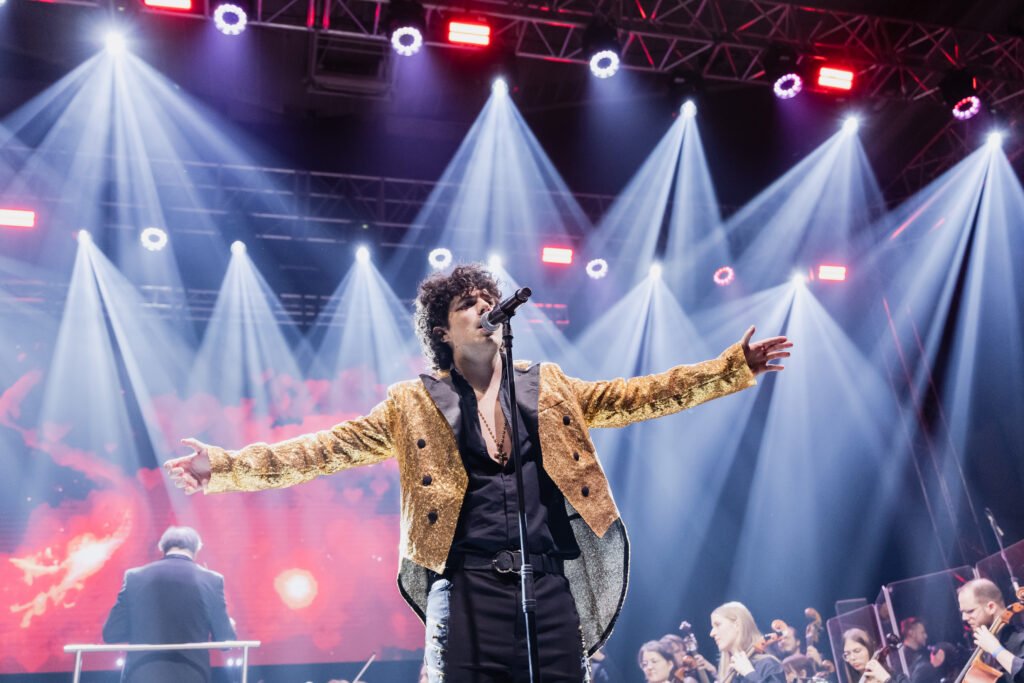
Today, I am deeply honored to stand as the frontman for Pop Design, one of Slovenia’s most legendary and beloved bands. Stepping into this role wasn’t just a career milestone—it was a profound responsibility to a legacy. Leading a band of this stature across the nation’s most iconic stages has given me something a textbook never could: a “front-row” understanding of the emotional electricity that flows between a performer and an audience.
I have stood in the center of that energy. I know the exact moment a track “hits” the right way—the way the bass needs to feel in your chest to spark a dance floor, or how a vocal needs to soar to move a stadium to tears.
This is the perspective I bring to the studio. When I sit down to master your record, I am not just looking at meters or checking boxes on a frequency analyzer. I am listening for the heartbeat. I bring a performer’s intuition to every project, treating your music with the same reverence I feel when I step onto a stage. My goal isn’t just to make your song sound professional; it’s to ensure that the same fire, the same grit, and the same emotional “hit” I feel during a live show is preserved and amplified for your listeners.
To me, a master isn’t finished when it’s loud enough—it’s finished when it moves me.

From Performance to Precision: The Science of Sound
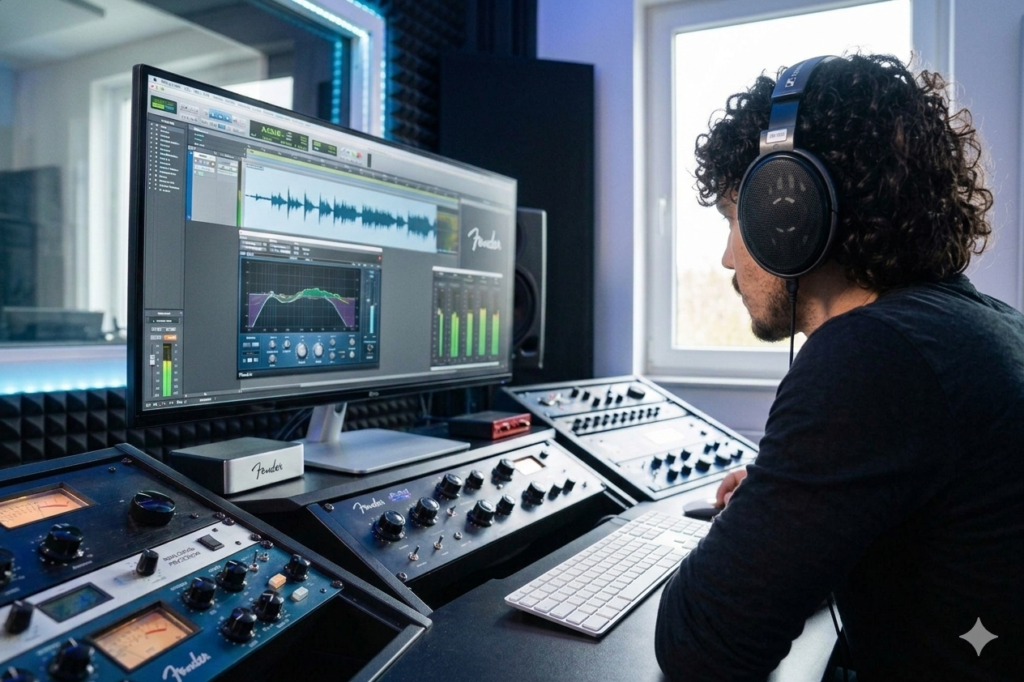
While the stage is where I connect with the soul of music, the studio is where I refine its technical essence. My fascination with the “behind-the-scenes” world began early, recording raw demos on GarageBand and experimenting with the limitless possibilities of music production. That curiosity led me to pursue a formal degree in Music Production, specializing in the high-stakes world of mixing and mastering.
I eventually chose to focus my career exclusively on Mastering—the final, vital gatekeeper in the creative process. In the industry, mastering is often whispered about as a “dark art” or a mystery, even among seasoned mixers.
Why the “Fear” of Mastering?
For many artists and producers, there is a certain anxiety surrounding this final stage. After weeks or months of laboring over every snare hit and vocal breath, you are suddenly asked to hand your “baby” over to someone else. There is a fear that the soul of the song might be lost, or that the “mystery” of the process is just a mask for aggressive compression and loud-at-all-costs processing.
The mystery exists because mastering requires a radical, almost clinical shift in perspective. While a mixer lives in the “micro”—balancing the relationship between individual instruments—a mastering engineer must live entirely in the “macro.” We aren’t looking at the trees; we are looking at the health of the entire forest.
What Mastering Actually Does to Your Track?
Mastering is the art of Translation and Finality. When I receive a stereo file, I am looking for three specific things that can make or break a record:
The Sculpting of Frequency: This isn’t just “EQ.” It is about finding the tonal balance that allows a track to sound expensive. It’s ensuring the low-end has the weight of a lynx’s pounce without clouding the mid-range, and that the highs have “air” without being fatiguing. It’s a game of inches; a shift at the right frequency can be the difference between a track that feels “small” and one that feels “legendary.”
The Control of Dynamics: This is where most of the mystery lies. Through specialized compression and limiting, I am controlling the “energy” of the air hitting the listener’s eardrums. I ensure the track has the competitive loudness required for modern streaming services, but more importantly, I preserve the punch—the life and movement that makes a listener want to turn the volume up, not down.
The Universal Translation: This is the ultimate goal. A mix might sound incredible in your studio, but will it fall apart in a car, on a smartphone, or on a massive club system? I am the “objective ear.” I check for phase issues, spectral imbalances, and headroom gaps to ensure that the emotional impact of your music remains identical regardless of where it’s played.
The Bridge to Professionalism
I see mastering as the bridge: the final, transformative transition that takes a raw, honest mix and turns it into a record. It is about removing the final veil between the artist and the listener.
When you work with me, the mystery disappears. You aren’t just getting a louder file; you are getting a specialized set of ears—honed by years on stage and in the studio—dedicated to revealing the true sound that was already there, waiting to be heard.